Korean Bibimbap
Highlighted under: World Cooking
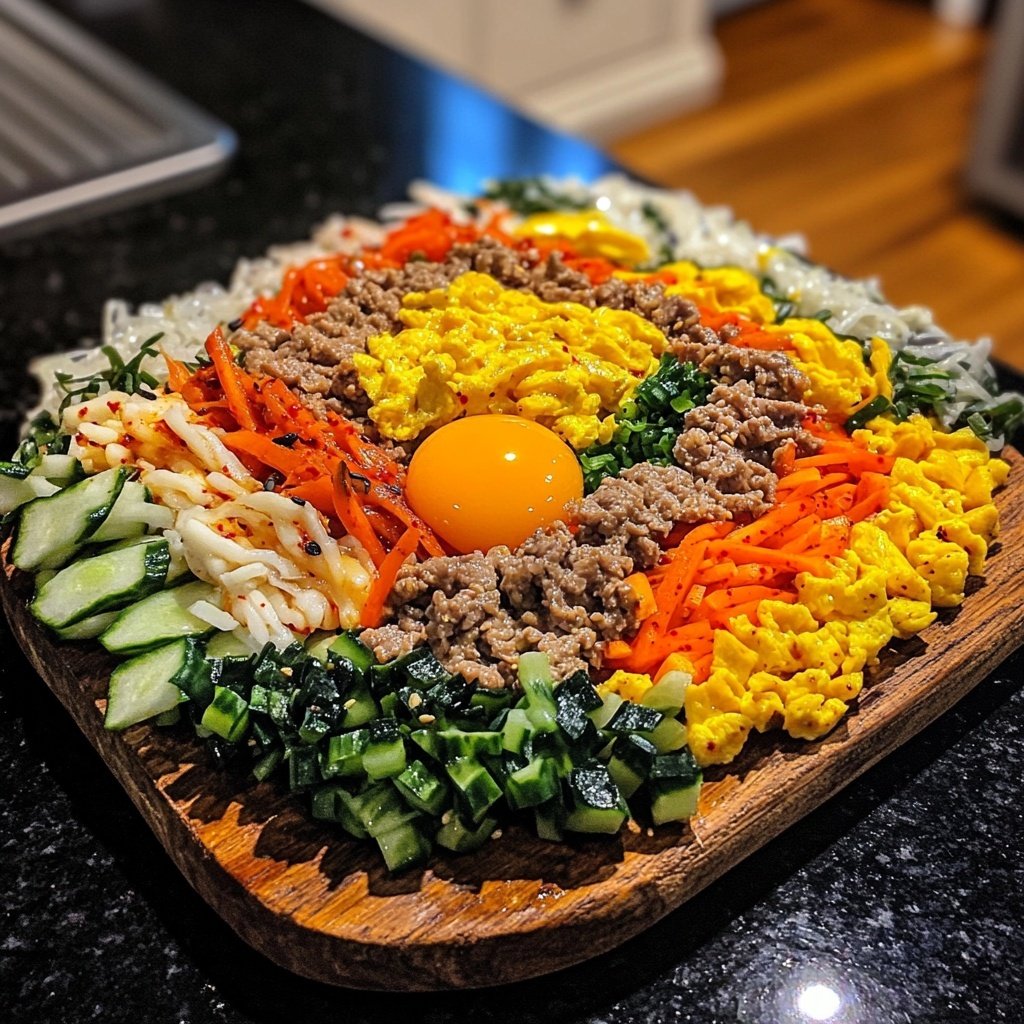
Korean Bibimbap is a vibrant and delicious dish that combines rice, vegetables, and protein, all topped with a spicy gochujang sauce.
Korean Bibimbap is a beloved dish that showcases the harmony of flavors and textures. It is not only visually stunning but also highly customizable, allowing you to use your favorite vegetables and proteins.
Why You Will Love This Recipe
- A colorful medley of fresh vegetables and savory proteins
- Deliciously balanced flavors with a kick from gochujang
- Perfect for meal prep and can be customized to your taste
The Heart of Bibimbap
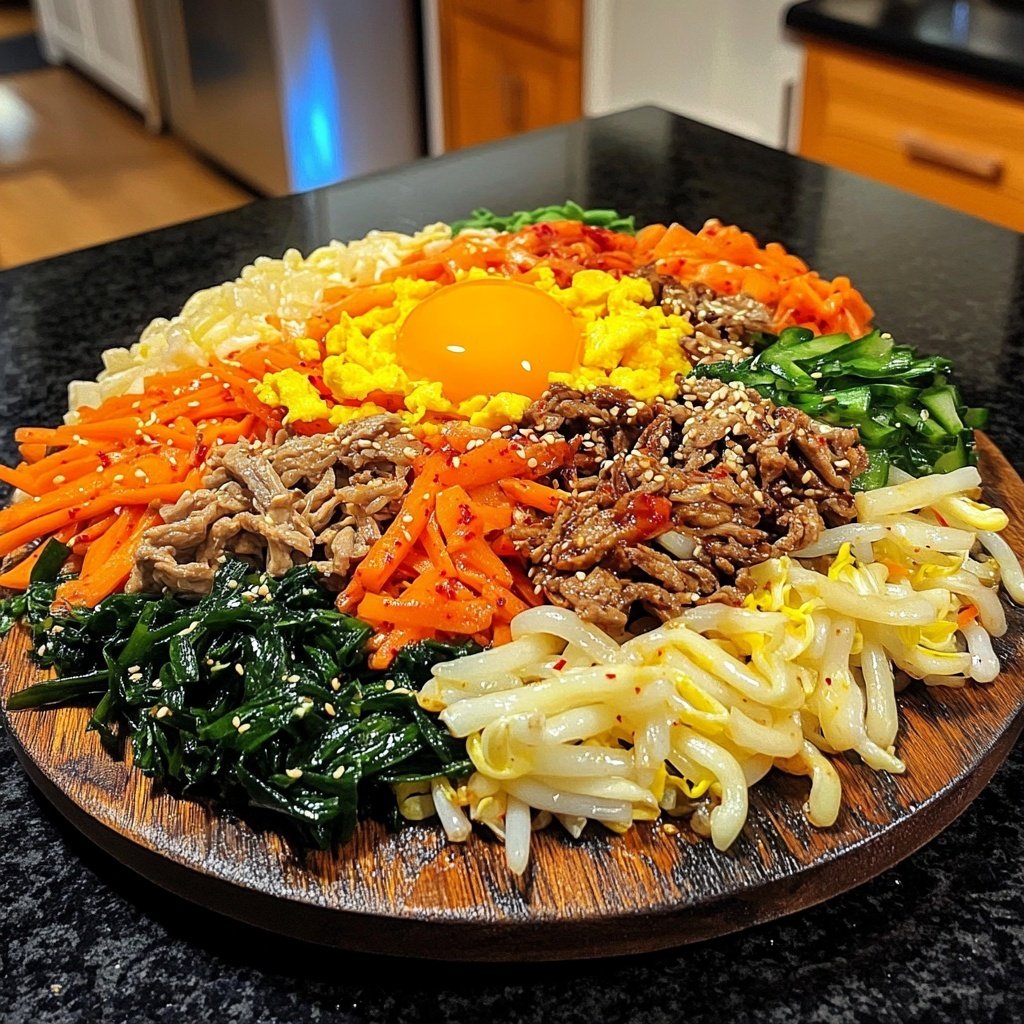
Bibimbap, which translates to 'mixed rice,' is a beloved staple of Korean cuisine. Its vibrant presentation and harmonious blend of flavors make it a standout dish in any meal. Traditionally, bibimbap is served in a hot stone bowl, which creates a delightful crispy layer of rice at the bottom, enhancing the overall texture and flavor profile of the dish. Each ingredient contributes to a complex yet balanced taste, making bibimbap a feast for both the eyes and the palate.
One of the key aspects of bibimbap is its versatility. You can customize it according to your dietary preferences, whether you are a meat lover or a vegetarian. The combination of fresh vegetables not only adds color but also provides essential nutrients, making it a well-rounded meal option. From the crunch of the carrots to the earthiness of spinach, each component plays a vital role in creating a delightful eating experience.
The Power of Gochujang
At the heart of bibimbap is gochujang, a spicy and slightly sweet Korean chili paste that elevates the dish to another level. This fermented condiment is not just a flavor enhancer; it also brings a depth of umami that is hard to replicate. When drizzled over the assembled bibimbap, gochujang ties together the diverse ingredients, creating a cohesive and satisfying dish. The heat from gochujang can be adjusted to suit your taste, making it a flexible option for various spice tolerances.
Gochujang is not only delicious but also packed with health benefits. It's rich in antioxidants and may even boost metabolism, making it a great addition to your meals. Incorporating this sauce into your bibimbap not only enriches the flavor but also adds a nutritional punch, giving you a meal that is both tasty and healthful. Plus, it can be used in other dishes, from marinades to dressings, making it a versatile staple in your kitchen.
Perfect for Any Occasion
Korean bibimbap is an ideal dish for various occasions, whether you're hosting a dinner party or preparing a quick weeknight meal. Its colorful presentation makes it a visually appealing dish that impresses guests, while its simple preparation allows you to whip it up quickly for family dinners. Moreover, it’s a fantastic meal-prep option, as all components can be made in advance and assembled when ready to eat, ensuring that you have a nutritious meal on hand even during busy weeks.
Additionally, bibimbap encourages creativity in the kitchen. Feel free to experiment with different proteins such as chicken, shrimp, or even plant-based alternatives like lentils or mushrooms. This adaptability not only caters to individual preferences but also allows you to use seasonal vegetables, reducing waste and keeping your meals fresh and exciting. No matter how you choose to prepare it, bibimbap is a dish that brings people together.
Ingredients
For the Bibimbap
- 2 cups cooked rice
- 1 cup spinach, blanched
- 1 cup carrots, julienned
- 1 cup zucchini, julienned
- 1 cup bean sprouts, blanched
- 4 eggs
- 200g beef (or tofu), sliced
- 2 tablespoons vegetable oil
- Salt and pepper to taste
For the Gochujang Sauce
- 3 tablespoons gochujang
- 1 tablespoon sesame oil
- 1 tablespoon sugar
- 1 tablespoon rice vinegar
- 1 teaspoon minced garlic
Feel free to mix and match your favorite vegetables!
Instructions
Prepare the Sauce
In a small bowl, mix together gochujang, sesame oil, sugar, rice vinegar, and minced garlic. Set aside.
Cook the Protein
In a skillet, heat vegetable oil over medium-high heat. Add the beef (or tofu) and cook until browned. Season with salt and pepper. Remove from heat.
Sauté the Vegetables
In the same skillet, add a little more oil if necessary and sauté the carrots, zucchini, and bean sprouts until just tender. Season with salt.
Fry the Eggs
In another pan, fry the eggs sunny-side up or to your preference.
Assemble the Bibimbap
In a bowl, layer the cooked rice, sautéed vegetables, blanched spinach, cooked protein, and top with a fried egg. Drizzle the gochujang sauce on top.
Mix everything together before eating for a delightful flavor explosion!
Pro Tips
- Feel free to add other toppings like kimchi or avocado for extra flavor.
Tips for the Best Bibimbap
To achieve the best texture and flavor, use short-grain rice, as it tends to be stickier than long-grain varieties. This stickiness helps the rice hold together when mixed with the other ingredients, creating a cohesive bite. Additionally, consider using a variety of colorful vegetables to enhance not only the visual appeal but also the nutritional value of your bibimbap. The more colors on your plate, the more nutrients you are likely to consume.
If you're cooking for a crowd, you can easily scale up this recipe. Just ensure that you have enough pans to cook all the vegetables and protein simultaneously, allowing everyone to enjoy their bibimbap hot and fresh. Don’t hesitate to add your favorite toppings, such as sesame seeds or nori strips, to elevate the dish further.
Storage and Reheating
Leftover bibimbap can be stored in an airtight container in the refrigerator for up to 3 days. To maintain the texture of the vegetables, it’s best to store the components separately if possible. When you’re ready to enjoy your leftovers, reheat the rice and protein in the microwave or on the stovetop. For the vegetables, a quick sauté can help revive their freshness and flavor.
If you plan to make bibimbap ahead of time, consider preparing the sauce and cooking the rice in advance, while keeping the vegetables and protein fresh until you're ready to serve. This way, you can assemble your bibimbap quickly and efficiently, making it a convenient meal option for busy days.
Pairing Suggestions
Bibimbap pairs wonderfully with a variety of side dishes, known as banchan, which can enhance your meal experience. Classic accompaniments include kimchi, pickled vegetables, or a refreshing cucumber salad. These sides not only add additional flavors and textures but also complement the main dish beautifully, creating a well-rounded Korean dining experience.
For beverages, consider serving your bibimbap with traditional Korean drinks such as barley tea or a refreshing soju cocktail. These drinks can help balance the spicy kick of the gochujang sauce while adding to the overall enjoyment of your meal. Whether it’s a casual dinner or a festive gathering, these pairings will elevate your bibimbap experience.
Questions About Recipes
→ Can I make Bibimbap vegetarian?
Absolutely! Just replace the beef with tofu or additional vegetables.
→ What can I substitute for gochujang?
You can use a mix of miso paste and chili powder, but the flavor won't be the same.
→ Is Bibimbap good for meal prep?
Yes, it's great for meal prep! Just keep the sauce separate until you're ready to eat.
→ Can I use brown rice instead of white rice?
Certainly! Brown rice adds more fiber and a nutty flavor.
Korean Bibimbap
Created by: Lysandra Quinn
Recipe Type: World Cooking
Skill Level: Intermediate
Final Quantity: 4 servings
What You'll Need
For the Bibimbap
- 2 cups cooked rice
- 1 cup spinach, blanched
- 1 cup carrots, julienned
- 1 cup zucchini, julienned
- 1 cup bean sprouts, blanched
- 4 eggs
- 200g beef (or tofu), sliced
- 2 tablespoons vegetable oil
- Salt and pepper to taste
For the Gochujang Sauce
- 3 tablespoons gochujang
- 1 tablespoon sesame oil
- 1 tablespoon sugar
- 1 tablespoon rice vinegar
- 1 teaspoon minced garlic
How-To Steps
In a small bowl, mix together gochujang, sesame oil, sugar, rice vinegar, and minced garlic. Set aside.
In a skillet, heat vegetable oil over medium-high heat. Add the beef (or tofu) and cook until browned. Season with salt and pepper. Remove from heat.
In the same skillet, add a little more oil if necessary and sauté the carrots, zucchini, and bean sprouts until just tender. Season with salt.
In another pan, fry the eggs sunny-side up or to your preference.
In a bowl, layer the cooked rice, sautéed vegetables, blanched spinach, cooked protein, and top with a fried egg. Drizzle the gochujang sauce on top.
Extra Tips
- Feel free to add other toppings like kimchi or avocado for extra flavor.
Nutritional Breakdown (Per Serving)
- Calories: 450 kcal
- Total Fat: 18g
- Saturated Fat: 4g
- Cholesterol: 210mg
- Sodium: 550mg
- Total Carbohydrates: 54g
- Dietary Fiber: 5g
- Sugars: 5g
- Protein: 20g